Level 3, Dawson House
The Park Centre for Mental Health Treatment
Research and Education, Wacol, QLD 4076
P: +61 7 3271 8660

Latest News

Why do people with mental illness die younger? Research reveals mental health inequality
People with a severe mental illness die more than 10 years earlier than the general population, research led by The University of Queensland has found.
Researchers have found that while the mortality rate has improved over the past 14 years for mental health patients, inequality is still prevalent.
Lead author Dr Mike Trott, from the Faculty of Health, Medicine and Behavioural Sciences, said they tracked Queensland hospital data over 14 years to assess the mortality rates of those with severe mental illness, such as depressive, neurotic, and stress disorders, alcohol and drug use, and schizophrenia.
“What we found was both encouraging but worrisome at the same time,” Dr Trott said.
We found the mortality gap is improving and people with severe mental illnesses are living longer than they were 14 years ago, which shows the health care system is on the right track.
“However, the mortality rate for patients with psychoses such as schizophrenia have flatlined, which is concerning as this highlights that the sickest people aren’t benefiting from better care.
“There have been some improvements, but the gap is still there in life expectancy rates – males with mental health disorders die 12 years earlier than the general population, and females die 10 years earlier.”
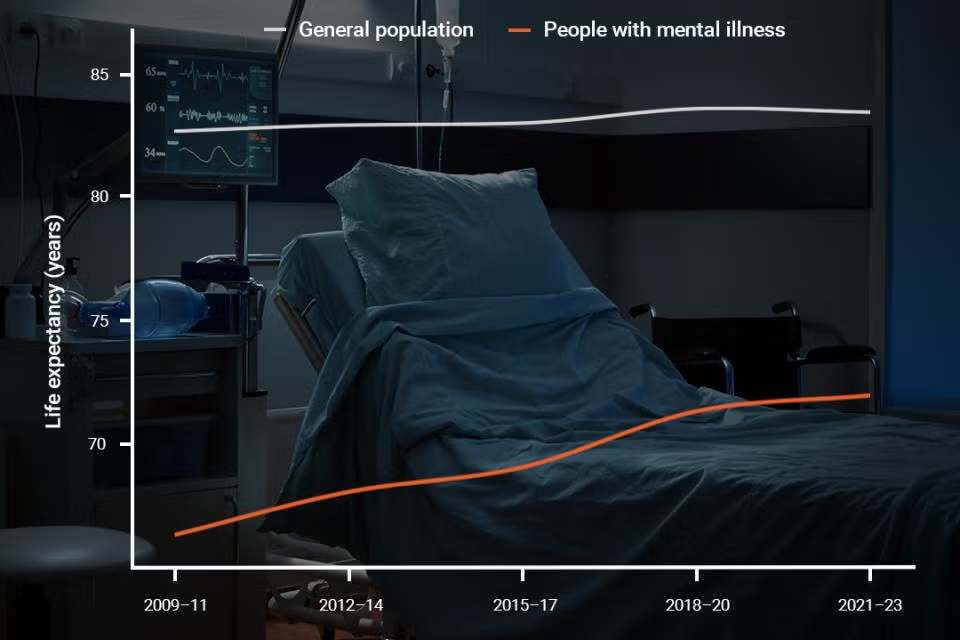
(Photo credit: Adobe Stock / The University of Queensland)
The difference in life expectancy between those with a severe mental illness compared to the general population.
Researchers analysed hospital mortality data from about 255,000 patients.
Dr Trott said this is the first time data had been examined in Australia in two decades.
“This research also shows patients are dying younger from preventable physical health conditions, such as cardiovascular disease,’’ he said.
“Patients with severe mental illness tend to require more complex care, and often medication side effects such as weight gain and reduction in physical activity can lead to poorer physical health.
“We found physical illness is the principal driver of excess mortality, so prioritising physical health for these patients as well as mental health could be essential in closing the gap for people with psychotic disorders.”
Read the research in Lancet Regional Health – Western Pacific.
This article was originally published on UQ News on 18 September 2026.
HEAD OFFICE

ACKNOWLEDGEMENT OF COUNTRY
The Queensland Centre for Mental Health Research (QCMHR) acknowledges the Jagera, Yuggera, Ugarapul and Turrbal people as the Traditional Owners of the land on which QCMHR operates and their continuing connections to land, waters and community. We pay our respects to their Elders, past and present and stand together with all Aboriginal and Torres Strait Islander peoples.
RECOGNITION OF LIVED EXPERIENCE
We acknowledge people in our communities with lived experience of mental health, drug and alcohol concerns and those who care for them. We respect and value their generous contributions to our research.